
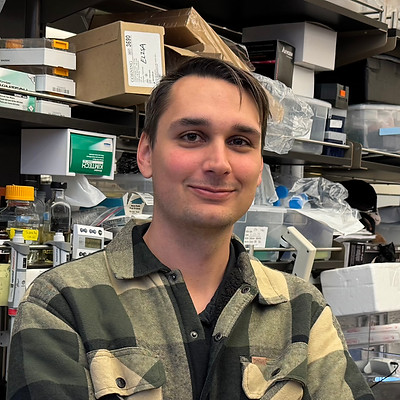
Post Doctoral Researcher
Research
During graduate school in Jun Wu's lab at UT Southwestern, I studied pluripotency and mitochondria in a variety of pluripotent stem cell types. I created pluripotent stem cells that lacked mitochondria, allowing me to determine how mitochondria influence pluripotency and cell differentiation. These cells also allowed me to generate human-monkey cell fusions that harbored mitochondria from different species. I used these cells to identify cellular processes that are differentially affected by species-specific differences in mitochondrial function. In addition, I studied the function and activity of different enhancer regions that control OCT4 expression, a master regulator of the pluripotent state.
In the Dillin Lab, I am creating biotechnologies to probe the relationship between mitochondrial mass homeostasis and aging. I am also exploring the creation of xenosymbiotes in the form of worms that harbor endosymbiotic algae. Using C. elegans and human stem cells as model systems, my goal is to broadly understand how endosymbionts influence organismal physiology, health, and aging.
Publications
Schmitz DA, Oura S, Li L, et al. Unraveling mitochondrial influence on mammalian pluripotency via enforced mitophagy. Cell. 2025;188(17):4773-4789.e22. doi:10.1016/j.cell.2025.05.020
Schmitz DA, Okamura D, Sakurai M, et al. Dissecting Oct4 enhancer function in pluripotent stem cells and mouse embryogenesis. Stem Cell Reports. 2025;20(12):102706. doi:10.1016/j.stemcr.2025.102706
Ni C, Schmitz DA, Lee J, Pawłowski K, Wu J, Buszczak M. Labeling of heterochronic ribosomes reveals C1ORF109 and SPATA5 control a late step in human ribosome assembly. Cell Rep. 2022;38(13):110597. doi:10.1016/j.celrep.2022.110597
Yu L, Wei Y, Duan J, et al. Blastocyst-like structures generated from human pluripotent stem cells. Nature. 2021;591(7851):620-626. doi:10.1038/s41586-021-03356-y